

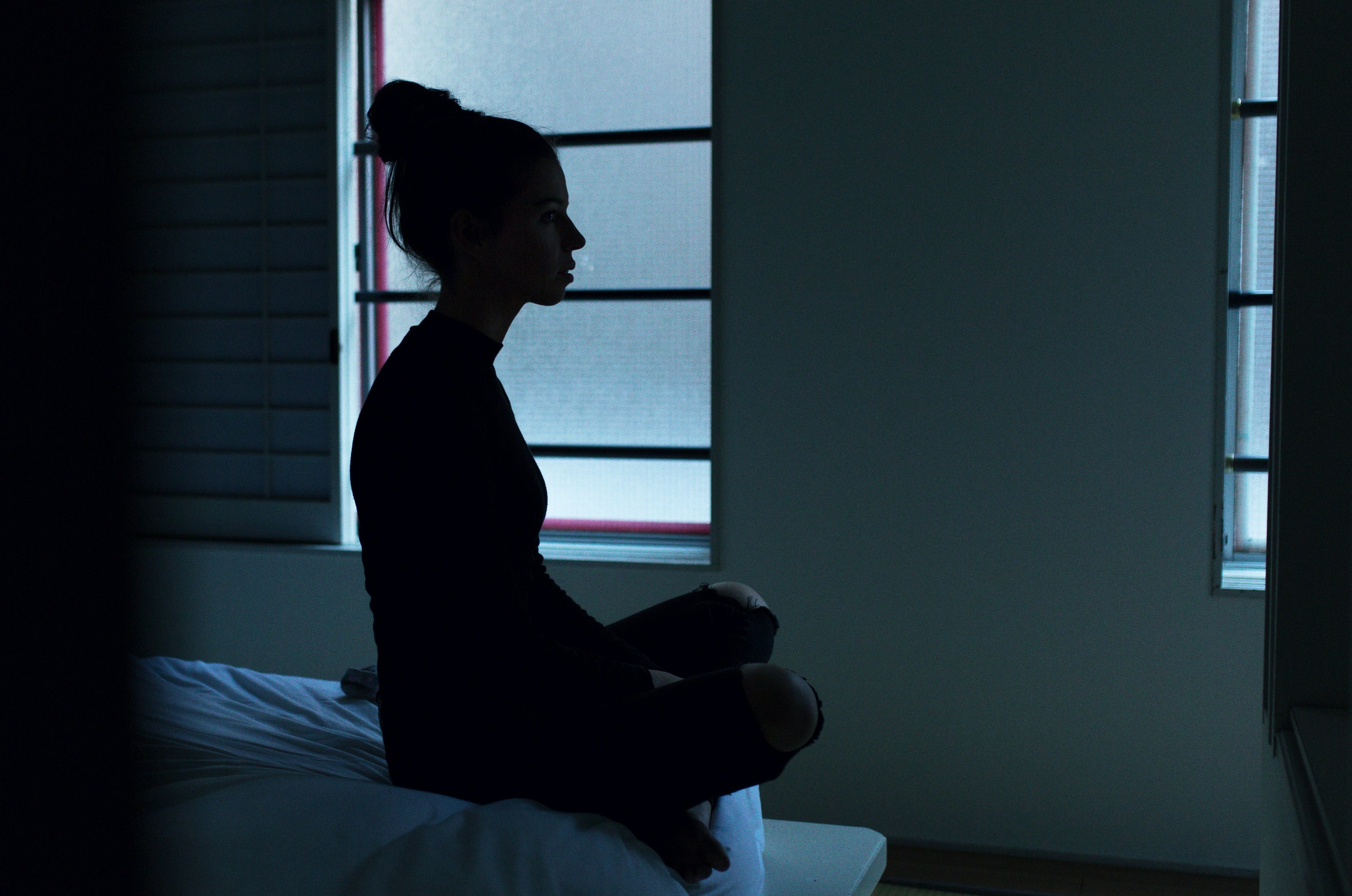
3:00 a.m. Mind already running. The mental list that was not bothering you at 10:00 p.m. is now somehow urgent. The thing you said three days ago. The thing you forgot to do. The thing you cannot fix at 3:00 in the morning but are absolutely going to attempt to solve anyway.
You did everything right. You were asleep by 11:00. You took the magnesium. You wore the blue light glasses. You did not look at your phone after 9:00 p.m. The bedroom is cold and dark. The weighted blanket is doing its weighted thing.
And yet.
Here you are. 3:00 a.m. Wide awake and already tired about it.
The sleep economy and its limitations
Americans spent somewhere north of 50 billion dollars on sleep aids last year. The apps. The supplements. The devices that clip to your finger and score your REM cycles and send you a detailed report on how poorly you slept, which you read at 7:00 a.m. while drinking something you hope will compensate.
The sleep podcast. The sleep coach. The sleep hygiene checklist, which is the most joyless phrase the wellness industry has yet produced. Avoid caffeine after 2:00 p.m. Keep a consistent schedule. Do not use the bedroom for anything except sleep and sex, which is advice that presupposes a life considerably more organized than most people are actually living.
The tracker will tell you that your deep sleep was poor and your HRV was low and you spent forty minutes in light sleep when you should have been in REM. You already knew all of this. You were there. What it will not tell you is why. The tracker measures the problem. Classical medicine looks for the source.
All of it is aimed at the container. The bedroom. The habits. The environment. The ritual.
None of it is asking what is happening inside the body that is making sleep impossible in the first place.
We optimized the bedroom and forgot to ask about the Liver.
The classical clock
Chinese medicine divides the 24 hour day into two hour windows, each governed by a different organ system. During the organ’s time window is when it is most active, most accessible, and most vulnerable during its window. This is the organ clock, and it has been a clinical tool for over two thousand years.
From 11:00 p.m. to 1:00 a.m., the Gallbladder holds the floor. From 1:00 to 3:00 a.m., the Liver takes over.
The Liver in Chinese medicine is not simply the organ that filters your blood, though it does that too. It governs the smooth flow of Qi throughout the body. It stores the Blood. It is responsible for the orderly movement of everything: physical, emotional, energetic. When the Liver is functioning well, things flow. When it is not, things stick. They back up. They heat up. They wake you at 2:47 a.m. with a sudden urgent need to revisit every decision you made in the last six months.
At night, when the body shifts into rest, the Blood returns to the Liver. This is when the Liver does its deepest work: processing what accumulated during the day, moving what got stuck, releasing what the body is ready to let go of. It is, if you want a modern metaphor, running a background process. Except the background process is also managing your emotional life, your nervous system, and your capacity to feel okay when you wake up.
When the Liver is overburdened, it cannot complete that process quietly. It surfaces. It wakes you. Right on schedule, between 1:00 and 3:00 a.m., just like the clock says.
This is not metaphor. This is a diagnostic pattern that has been documented and treated clinically for millennia. It just never made it into the sleep hygiene checklist.
What burdens the Liver
Here is where it gets uncomfortable, because the list reads like a description of modern life.
Unprocessed emotion. The Liver is specifically associated with anger in classical Chinese medicine, and anger in this context does not mean only the loud kind. It means frustration held without outlet. Resentment that did not get spoken. Irritation absorbed and managed and swallowed and managed again. The low grade chronic kind that most people do not even register anymore because it has been the running background process for so long.
Alcohol. This one is particularly cruel, because alcohol is what most people reach for to wind down, to take the edge off, to make the transition from the day into the evening. It works in the short term. It also directly taxes the Liver, disrupts the Blood returning to the Liver in the early morning hours, and is one of the more reliable ways to guarantee a 2:00 a.m. wake. The glass of wine that helped you fall asleep is frequently the reason you cannot stay there.
Late eating. The classical texts are consistent on this. The digestive system needs to wind down before the body can properly rest. A heavy meal at 9:00 p.m. keeps the Stomach active when the Liver needs to begin its work. The after dinner snack. The late night kitchen visit. All of it redirects resources away from where the body needs them in the small hours.
Chronic stimulation. The screen before bed is not simply a blue light problem. It is a nervous system problem. The Liver governs what moves through the body, and the modern nervous system is being asked to process an essentially continuous stream of input until the moment the light goes off. That is not a container you can simply close and expect the contents to settle. The Liver is still working through it at 2:00 a.m. because it did not get a transition.
The overstimulated, under-rested, chronically frustrated modern nervous system is, from a classical standpoint, a Liver problem. We just gave it different names and sold it different solutions.
What your grandmother knew
Every culture, without exception, had an evening wind-down practice. Not because they read a study. Because they watched what happened when people did and did not do these things.
The Spanish paseo. The after dinner walk that was not optional, it was just what you did, the whole family, every evening, at a pace that had no destination. The Italian passeggiata. The same thing, different latitude. In West Africa, the fire after the meal was the appointment. Everyone came. Stories were told. The elders spoke. No one was checking anything. The day ended there, at the fire, before the night could begin.
Movement after eating. Social, unhurried, outside. Functionally, this is Liver medicine. Movement after a meal supports the smooth flow of Qi. It prevents stagnation. It is the reason European grandmothers could eat pasta at 8:00 p.m. and still sleep.
The chamomile tea. The valerian. The warm milk with honey that sounds like a cliche until you understand that warming the digestive center triggers the vagus nerve, shifts the body into rest and digest, and quiets the nervous system before sleep. Your sleep coach is charging a fortune for that outcome. Your grandmother was doing it with a saucepan. She was not being sentimental. She was being effective.
The prohibition on talking about upsetting things after dark. This was considered practical wisdom in many traditional cultures, not emotional avoidance. No arguments at the dinner table. No rehashing of the day’s grievances by lamplight. Certainly no horror movies or forty-five minutes of doomscrolling through whatever the algorithm decided you needed to see before closing your eyes. The Liver does not need fresh material to process at midnight. Give it a quiet entry into the night and it will do its work without waking you for a consultation
The unhurried evening. The thing that has been entirely colonized by productivity, screens, and the sense that the hours between dinner and sleep are hours that should be used for something.
They were right. The evening is for winding down the Liver. Everything else is negotiable.
What the 3:00 a.m. wake is telling you
Not everyone wakes at the same hour for the same reason. The classical patterns are distinct, and recognizing yours is the beginning of doing something about it.
If you fall asleep easily but wake between 1:00 and 3:00 a.m. with a mind that immediately activates, classical medicine calls this the Liver running on empty. The Blood in this framework is not just the fluid in your veins. It is the nourishing, anchoring medium that keeps the mind quiet at night. When it is depleted, the mind floats up. You are awake and already three conversations ahead of yourself. This pattern is often worse around menstruation, after periods of overwork, or during any season of prolonged depletion. Your body ran low on something it needed to hold you under.
If you have difficulty falling asleep in the first place, feel warm or restless in bed, wake with irritability already installed, and find your mind running arguments or replaying grievances, classical medicine calls this the Liver backed up and overheating. Something is stuck. It has been stuck long enough to generate friction, and friction generates heat. Heat rises at night. It agitates. It does not let you settle. This is the pattern of the person who cannot remember the last time they felt truly relaxed, who describes themselves as wired but tired, and who reaches for the glass of wine that helps them fall asleep and then wakes them at 2:00 a.m. anyway.
If the waking comes with anxiety, with the kind of free floating dread that does not attach to anything specific but sits on the chest, classical medicine sees this as two systems that have stopped cooperating. The mind cannot settle because the Liver is not moving smoothly, and when the Liver is not moving smoothly, the mind pays for it. Think of it as the emotional fuse box tripping in the small hours. Nothing specific triggered it. Everything accumulated. This is an extremely common presentation in clinic. It is also almost never identified as a Liver pattern in conventional settings.
Knowing which one you are looking at changes what you do about it.
What to actually do
This is not a protocol. It is a direction.
Move after dinner. Not a workout. A walk. Fifteen minutes. Twenty if you have them. Around the block, with whoever will come with you, or alone. This is not exercise. This is helping the Liver move what it needs to move before the night begins.
Stop eating two to three hours before bed. This is the one that gets the most resistance and also the one that produces the most immediate results. The Stomach needs to be quiet before the Liver can work. Give it time.
When twilight comes, drop the lights. This is the one most people have never tried and the one that changes everything fastest for those who cannot sleep. No overhead lighting after dark. Lamps at the lowest setting. Candlelight if you will do it. The body’s rhythms are not broken. They are confused. Bright artificial light after sunset tells the nervous system it is still midday. Dim the room and the body begins to remember what it already knows. I have seen this alone turn around cases of severe insomnia that nothing else touched.
Look at the alcohol. Not a lecture, just an observation. If you are waking between 1:00 and 3:00 a.m. regularly and drinking most evenings, run a two week experiment. The data will be unambiguous.
Make the transition. Something between the day and the sleep. Tea. A short walk. Ten minutes outside. A conversation that is not about logistics. Something that signals to the nervous system that the processing portion of the day is over. The Liver responds to transitions. It needs one.
Address what is stuck. This is the harder one. The frustration that is living in the body, the resentment that has not found its way out, the anger that got managed instead of moved. The Liver is holding it. It will continue to surface it at 3:00 a.m. until it gets addressed. Movement helps. Conversation helps. Creating rather than consuming in the evenings helps. Therapy, if that is available and fitting. Acupuncture, which is exceptionally good at moving what has become stuck and asking the Liver to release its grip.
The 3:00 a.m. wake is not a mystery. It is a communication. The question is whether you are interested in what it is saying.
One thing tonight
You do not have to overhaul the evening. Start with one thing.
Make the transition real. When the day ends, let it end. Tea. A walk. Ten minutes outside where it is quiet. Something that is not a screen and is not a task. Something that tells the Liver: we are done for today. You can begin.
It will.
Unreal. Woke up at 2am and have been awake since. It’s now 3:30am. I need some help with my liver!
This is all so true! I am a very driven person and, for years, I could not shut off my thoughts enough to settle down for sleep. College started the whole thing with "my best papers written at midnight." Then came all the pregnancies and late nights spent with heartburn and then nursing babies. It just became easier to do most of my difficult tasks involving the house or our company late at night. What a TERRIBLE habit! Now, I end my day praying in bed, handing over all my worries to God, Who does not sleep. I pray with gratitude for my blessings. I regularly fall asleep now without having prayed through all eleven kids! lol...Now, if I can just get my bladder to stop dragging me to the bathroom at 3 AM!