

Check out my AI Statement on the bottom of my article.
As this hot summer pushes on, I wanted to write about my thoughts around summer time. The heat of summer is often a topic in my clinic with clients. By mid-July, many start quietly wondering why they feel terrible. Not sick exactly. Just off.
Sleep gets lighter. Patience gets shorter. The body feels puffy, heavy, overheated, or strangely tired. Digestion gets weird. The iced coffee that felt like survival at 9:00 a.m. is somehow still sitting in the stomach at noon. Everyone else appears to be having a breezy summer, and you are trying not to become a small domestic emergency in the grocery store parking lot.
So you assume it’s you.
Your hormones. Your discipline. Your hydration. Your age. Your attitude.
But the body is not irrational.
It is Summer.
Summer has instructions.
This used to be obvious. When the weather changed, life changed with it. People woke up earlier. Work shifted around the hottest part of the day. Clothing loosened and fabrics changed. Windows opened before the sun rose and closed before the house turned into an oven. Children were told to stop running around before they made themselves sick. Someone’s grandmother was always standing a doorway saying, “Come sit down. You are too hot.”
She was not being dramatic.
She was practicing seasonal medicine.
Now we live as if seasons are decorative. Summer means vacation photos, linen pants, farmer’s market tomatoes, and the seasonal return of people saying “hot enough for you?” as if they’re legally required to participate in weather conversation.
But the body is not decorative.
The body knows when it is Summer.
And it does not operate in July the way it operates in October.
That is the part modern life keeps forgetting.
Summer Has a Physiology
In classical Chinese medicine, summer belongs to the Fire Element. It is the season of heat, brightness, expansion, sweating, circulation, joy, laughter, connection and the Heart.
This is not metaphor in the decorative sense. It is a way of describing what the body is already doing. The vessels open. The pores open. Sweat moves outward. The pulse often feels more expansive. Appetite changes. Sleep changes. Moods change. The Heart and the Shen (the mind/mental spirit), are more exposed to the brightness and agitation of the season.
When summer is balanced, this can feel wonderful.
People are more social. Food is simpler. The body wants movement in the morning and rest when the sun is high. The world feels more available. There is a reason every culture with a functioning relationship to climate developed some version of the slow evening walk, the shaded porch, the afternoon rest, the food eaten outside after the worse of the heat has passed.
Summer opens the body.
But what opens can also be overwhelmed.
Too much heat agitates the Shen. It can make sleep lighter, tempers shorter, anxiety louder and the body feels restless inside its own skin. It can dry the body fluids, exhaust Qi, scatter focus and leave a person tired in a way that does not feel like ordinary fatigue. Not sleepy.
Depleted brightness.
Anyone who has cried alone in a car on a hot summer day understands this.
The Air Conditioning Problem
Let me be clear.
Air conditioning is not the enemy.
There is no virtue in pretending 98°(37°) with humidity is a character building exercise. Heat can be dangerous, very dangerous. Elders, children, pregnant women, outdoor workers, and people with chronic illness can be vulnerable this time of year. Anyone without reliable cooling are not participating in a wellness trend. They are managing a real physiological burden.
Use the air conditioning.
The problem is not cooling the body when it needs cooling.
The problem is that modern summer often creates a strange seasonal whiplash.
Blazing heat outside. Refrigerator level air inside. Iced drinks all day. Cold smoothies. Cold salads. Freezing grocery stores. Hot car. Cold office. Hot sidewalk. Cold bedroom.
The body spends the whole day being yanked between extremes.
From a classical medicine perspective, this matters. The exterior is deals with Heat. The interior, especially the Spleen and Stomach, is often being hit with Cold. The result is not balance it is confusion.
You feel hot, so you pour Cold into the system.
The mouth is relieved.
The digestion is not always consulted.
Why Cold Is Not the Same as Cooling
This is where summer advice often goes sideways.
When the body is hot, cold things feel correct. Iced coffee. Ice water. Smoothies. Raw salads. Frozen fruit. Big cold drinks with condensation running down the side like a pharmaceutical advertisement for relief.
And sometimes cold is appropriate. Heat needs to be cleared. Fluids need to be protected. The body needs help.
In classical dietary therapy, cooling foods clear Heat without injuring the digestive Fire. Watermelon, cucumber, mint, mung beans, lightly cooked summer vegetables and room temperature teas can help the body meet Heat without asking the Spleen and Stomach to recover from a cold plunge at every meal.
The distinction matters.
The Spleen and Stomach prefer warmth and rhythm. They are responsible for transforming food into usable Qi and Blood. When they are already working hard in the heat, flooding them with iced drinks and raw food can weaken the very system you need to keep you steady.
This is how a person can feel hot and bloated at the same time.
A modern summer classic.
The face is flushed. They belly is cold. The iced coffee is innocent until proven guilty.
Your Grandmother Knew How to Handle Heat
Every traditional culture on earth has summer medicine.
Not because anyone branded it that way. Because people had to survive summer before the invention of pretending the seasons were optional.
Mint tea in the Middle East and North Africa. Hibiscus drinks in the Caribbean and West Africa. Mung bean soup and mung bean drinks across East Asia. Barley water in Britain, France and Greece. Horchata de Chufa in Spain.
Drinks were brewed in clay/ceramic jugs in sun and then kept in the shade to cool. Chicha Morada in Peru. Tereré in Paraguay, Northern Argentina and Southern Brazil. Lightly fermented drinks like Kvass in Ukraine, Russia, Poland and neighboring regions. Posca the ancient Roman electrolyte drink.
And the food, watermelon eaten outside where the mess belonged. Cucumbers with salt. Bitter greens. Pickled vegetables. Rice porridge. Broths that were light not heavy. Fruit eaten in season.
And rest. The radical, suspiciously unmonetized practice of doing less when the sun is trying to kill you.
There is a reason hot climates developed midday pauses. Siesta. Riposo. Sesta. Qailulah. Wǔjiào. Long lunches behind shutters. The day bent around the heat because the body had to.
Modern productivity culture does not bend.
It turns up the air conditioning, pours another iced coffee and schedules a strategy call at 1:00 p.m.
Then everyone wonders why they are irritable, swollen, tired, sleepless and craving salt.
The Flavors Were Not Random
Look at this list again. It is not a collection of charming regional habits. It is the same prescription written in six languages.
Bitter clears heat and drains it downwards. Dandelion greens, arugula, endive, bitter melon, green tea, the dark leafy things many often think; nobody eats that for pleasure. Bitter is also the flavor of the Fire Element, which is why the cultures living in the hottest summers are the ones drinking the most bitter things in them.
Sour hold fluids in. Think about it when sour hits your mouth you pucker. When you are sweating all day, sour is what keeps you from losing everything you are drinking. Lemon, lime, vinegar, tart plum, hibiscus, tamarind. The sour plum drinks of East Asia and the hibiscus drinks of the tropics were electrolyte strategy long before anyone thought to charge forty dollars for a tub of powder.
And congee. Thin rice porridge, cooked slowly, eaten warm or at room temperature. It is the most digestible food on earth, and it is what half the world eats when the heat has taken the appetite away entirely.
Here is the simplest version of all of it, I call it:
Three Flavor Drink
Add a pinch of mineral salt and a squeeze of lemon or lime to room temperature water.
If you want sweetness, add a small spoonful of honey.
Drink it slowly, especially after sweating.
Salty holds water in the body. Sour holds bodily fluids. Sweet, in small amounts, generates them.
That is a three flavor formula and it has been keeping people upright in hot climates for about four thousand years.
You can still buy the trendy powders if you want to.
Sweat Is Not a Waste Product
Classical medicine calls sweat the fluid of the Heart. Not poetically. Structurally. Sweat and Blood come from the same source, which is why a day of heavy sweating can leave a person with not just thirst but hollowed out, jittery, palpitating, and oddly to tears over nothing.
Hydration is not only water. It is water plus what water needs in order to stay in you.
But the more useful thing to know is what to do in the ten minutes after you sweat.
When the body sweats, the pores are open. That is the entire point. It is also the vulnerability. Walk out of that heat directly into air conditioning, stand under a ceiling fan, or step into a cold shower and the pores slam shut with the heat still trapped inside and cold now sitting in the muscle layer where it does not belong.
This is the summer cold nobody can explain. The stiff neck that arrives in August. The headache that shows up an hour after a workout. The chill that will not leave the body that spent the whole day in 90°(32°) heat.
Dry off first. Give the body a few minutes to cool down on its own before you cool it artificially. Warm or lukewarm shower rather than cold. Change out of the wet shirt.
Your grandmother called it sitting in a draft.
She was describing a mechanism.
The Back of Your Neck
While we are here, one more thing.
In classical medicine, the base of the skull and the upper back on where Wind enters the body. Every culture with a long memory tell people to keep that area covered, which is why you see scarves in countries that are on fire nine months of the year. It’s why your mother or grandmother put a collar up on a child who was already sweating.
Now consider where the air vent in aimed in most offices, cars, planes, and trains.
Consider the fan pointed at the bed all night.
Cover the back of your neck in cold rooms. Do not sleep with the air blowing directly on your head. Keep something with sleeves in your bag or a scarf. I know it sounds like advice from a woman with hard candy in her purse but it is also the reason she never woke up unable to turn her head.
Summer Belongs to the Heart
The Heart in classical medicine is not just a pump. It governs Blood, houses the Shen (the mind/mental) and relates to joy, connections, presence and the capacity to be animated by life.
Summer, at its best, nourishes the Heart.
This is the season of laughter on porches, meals with other people, music outside, theater in the park, and slow evenings. The body is meant to open somewhat. The spirit is meant to come outward.
But the Heart does not thrive under constant stimulation.
There is a difference between joy and agitation.
A summer lived entirely through screens, over work, cold drinks, over scheduling and poor sleep does not nourish the Heart. It scatters it.
This is one reason summer anxiety has a particular quality. It can feel bright, restless, exposed. They body is tired but the mind will not relax. The Heart is overstimulated. The Shen has nowhere to sit to cool down.
The answer is to give summer a rhythm.
What Rhythm Actually Looks like
Move in the morning before the sun is high. This is the window where the body will spend Qi without sending you a bill at 4:00 p.m.
Pause or at least slow down during 11:00 a.m and 1:00 p.m. In the classical organ clock those are the Heart hours, the brightest part of the brightest season and every culture that lives in real Heat stops working during them. It is not a nap, it is a tactical retreat.
Eat your largest meal at midday, when the digestive Fire is strongest, and eat lightly at night. Heat can lower your appetite anyway so stop arguing with it.
Talk a walk after sunset. Warm air, low light and no pace goal kind of walk. This is the hour that settles the Shen and it is the most underrated intervention available to a person who cannot sleep in July. Heat makes sleep light on its own and a stimulated mind at 10:00 p.m. will not go down quietly.
Morning movement. Midday pause. Lightest meal last. Walk at dusk.
None of this requires an app, a subscription or device that vibrates when you have failed.
Classical medicine never asked the body to ignore the world it lived in. It watched the world and the body together.
Living in rhythm with the season is not a wellness practice.
The deepest medicine has always lived in the simplest of tasks.
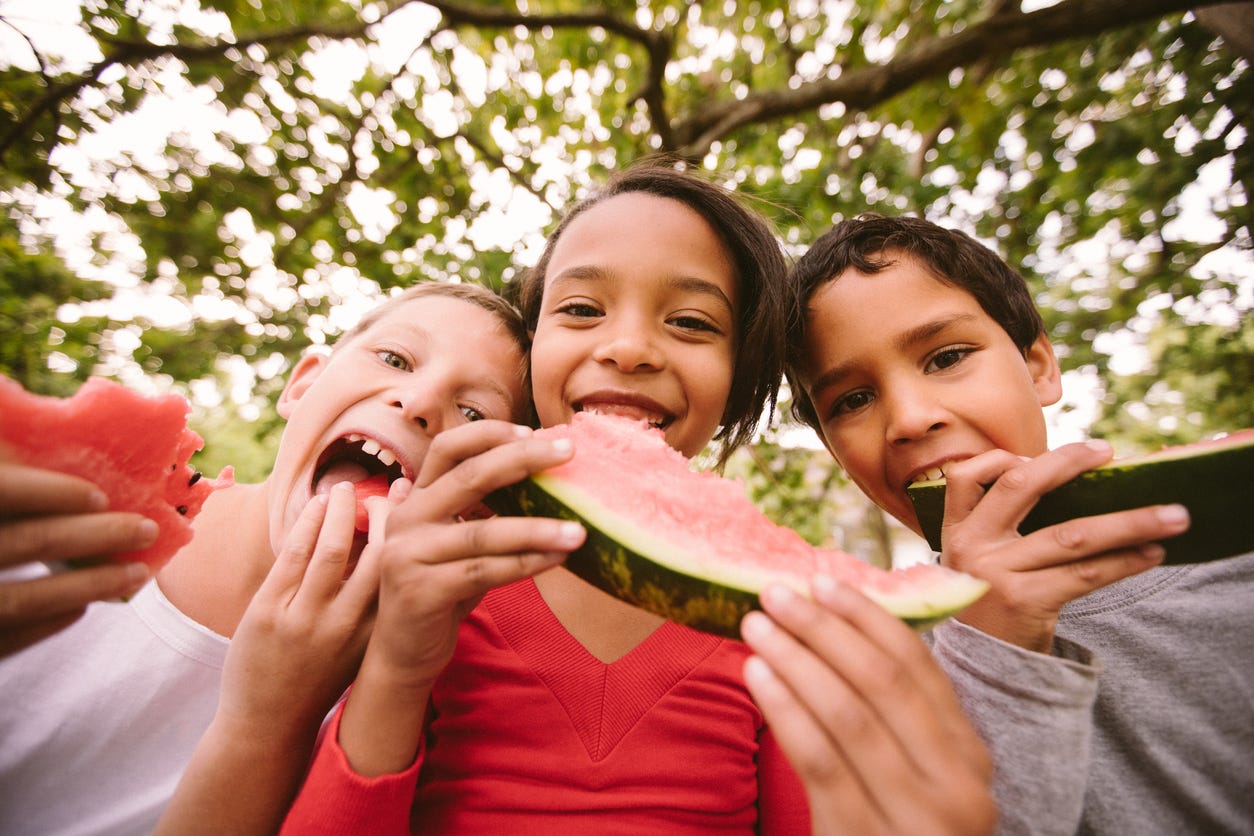
Go eat that watermelon outside, hand a piece to someone you love, let the juice drip down your arm while you laugh and smile.
Your Fire Element will thank you.
AI Statement: I use AI tools—primarily Claude—to research and outline my content. I am the source material: the personal stories, the frameworks, the business experience, and my opinions about what will actually help you. AI creates my visuals on occasion and when possible I buy them from a human. I carefully write, review and edit everything before it reaches you. I love what I do and I am present in the entire process. This is 100% me.
I thought I would walk away with learning one thing. Instead, I learned 10.
Regarding your AI disclaimer: I can see and feel you in every line! Your writing reflects the same frankness and compassion we all see in your office.
It was actually a relaxing pleasure for me to read this post. I am one of those who revel in summer and hibernate in winter. In summer, I feel like a sunflower that turns to the sun, but in winter, I can be found curled in a fetal position under a fleece blanket watching Jane Austen movies. I literally become a slug. Maybe the reason so many of us drag out the pumpkin spice coffees, candles, and orange sweaters the first chance we get is because we feel best somewhere between the heat of summer and the brutality of winter!
I love the simplicity of the rhythm of summer that you guide us to embrace.